
If you’ve started researching how to learn to scuba dive, you’ve almost certainly come across one question more than any other:
“Should I choose PADI or SSI?”
It’s one of the biggest debates in recreational diving. Spend a few minutes searching online and you’ll find countless articles, YouTube videos and forum discussions arguing why one agency is supposedly better than the other. Some people swear by PADI, others insist SSI is the superior choice, and before long it can feel like choosing the right agency is one of the biggest decisions you’ll make before starting your diving journey.
The reality is much less dramatic.
In fact, if you asked experienced instructors what has the biggest impact on a new diver’s experience, most would give exactly the same answer: the dive school and the instructor. The logo printed on your certification card is a long way down the list.
That’s not to say there are no differences between PADI and SSI – there certainly are – but they’re often much smaller than people imagine. Both organisations have spent decades developing training systems that produce safe, competent recreational divers, and both issue certifications that are recognised all over the world.
So rather than trying to convince you that one agency is “better”, this guide aims to explain the genuine differences, dispel a few common myths and help you focus on what really matters when choosing where to learn.
Instructor Course
There Are More Than 150 Scuba Training Agencies
One of the first misconceptions worth clearing up is that recreational scuba diving isn’t limited to just PADI and SSI.
Although these are undoubtedly the two names you’ll hear most often, there are actually more than 150 scuba training agencies operating around the world. Organisations such as SSI, PADI, RAID, SDI, NAUI, BSAC and CMAS are among the best known, but they represent only a small proportion of the agencies that certify divers internationally.
The reason PADI and SSI dominate the conversation is largely because they’re the two biggest names in recreational diving. PADI, in particular, has become almost synonymous with learning to dive, to the point where many people casually say:
“I want to do my PADI.”
It’s something instructors hear almost every day.
Technically, though, it doesn’t really make sense.
PADI isn’t the qualification – it’s simply the organisation delivering the training. Saying you want to “do your PADI” is a bit like saying you want to get your “Toyota driving licence.” Toyota builds cars; it doesn’t issue driving licences. In exactly the same way, SSI and PADI are simply training organisations that issue internationally recognised scuba certifications.
The qualification is what matters – not the company that printed the certification card.
Is SSI a New Agency?
This is probably one of the biggest myths in scuba diving.
Because SSI has grown so quickly over the last decade, many people assume it’s a relatively new organisation trying to compete with the long-established PADI.
In reality, nothing could be further from the truth. PADI was founded in 1966. SSI followed in 1970. That’s a difference of just four years.
Both organisations have now been training divers for more than 50 years and have certified millions of people worldwide. Both have helped shape recreational diving into what it is today, and both continue to evolve their training systems as the industry changes.
The perception that SSI is a newcomer comes largely from its rapid recent growth, not from its age.
Are Both Certifications Recognised Worldwide?
Yes.
This is probably the easiest question to answer.
Whether you earn your Open Water certification through SSI or PADI, you’ll be able to dive with centres all over the world.
An SSI diver can book dives with a PADI centre. A PADI diver can book dives with an SSI centre.
Neither agency limits where you can dive, and both certifications are recognised internationally.
Once you’re qualified, dive centres are generally much more interested in your experience level, how recently you’ve been diving and whether you’re comfortable within your certification limits than which organisation issued your certification card.
Is One Course More Difficult Than the Other?
No.
Despite what you might read online, neither agency is inherently more difficult than the other.
Both teach the same core diving skills. Both follow internationally recognised training standards. Both are designed to produce safe, confident recreational divers.
The biggest difference isn’t the agency – it’s the instructor teaching the course.
Every instructor develops their own teaching style over time. Some naturally spend more time explaining theory, while others are exceptional at demonstrating skills in the water. The best instructors know how to recognise when a student simply needs a different explanation, more practice or a little extra time to build confidence.
Those qualities aren’t determined by whether someone teaches PADI or SSI.
They’re developed through experience, mentoring and a genuine passion for teaching.
If you take just one thing away from this article, let it be this:
The quality of your instructor will have a far greater impact on your experience than the name of the training agency.
 What Actually Makes a Great Open Water Course?
 What Actually Makes a Great Open Water Course?
Think back to your own time at school. Was your favourite subject your favourite because of the curriculum? Or was it because of the teacher? Learning to dive is no different.
A great instructor can make even the most nervous student feel relaxed and confident. They know when to slow things down, when to explain something differently and when to simply give someone the time they need to become comfortable underwater.
Likewise, a great dive centre creates an environment where students feel supported from the moment they arrive until long after they’re certified.
Small groups, quality equipment, experienced staff, good organisation and a welcoming atmosphere all contribute to a fantastic course.
Years later, most divers remember the people they learned with, the excitement of their first breaths underwater and the marine life they encountered.
Very few remember which agency logo was printed on their manual.
Why Have So Many Dive Centres on Koh Tao Switched to SSI?
If you’ve been researching dive schools on Koh Tao, you may have noticed something interesting.
Today, there are actually more SSI dive centres on the island than PADI centres.
That often surprises people, especially considering PADI remains the largest recreational diving training organisation in the world.
There isn’t one simple reason for this shift, but there are several factors that have encouraged many dive centres – including ourselves – to choose SSI.
One of the biggest is SSI’s teaching philosophy.
While both agencies work to strict training standards, SSI allows instructors greater flexibility in how they deliver those standards. Every required skill still has to be completed successfully, but instructors have more freedom to adapt their teaching because no two students learn in exactly the same way.
Some people benefit from extra demonstrations. Others learn best through repetition. Some simply need a little more time before everything clicks.
Many instructors appreciate being able to adapt their teaching to suit the individual student rather than following a rigid sequence. The standards remain exactly the same, but the journey to achieving them can be more personalised.
SSI has also invested heavily in its digital learning platform. The SSI app combines learning materials, instructional videos, digital certification cards, dive logs and continuing education into one place, creating a seamless experience that many instructors and students find intuitive and easy to use.
Another advantage that’s particularly relevant on Koh Tao is that SSI has a regional office on the island. While students rarely see this behind the scenes, it provides local dive centres with direct support, training and assistance, helping them stay up to date and continue delivering high-quality programmes.
None of this makes PADI a worse agency. It simply explains why many dive centres have decided that SSI better suits the way they want to teach.
So… Which One Should You Choose?
After everything we’ve discussed, you might be expecting us to tell you which agency we think is best.
The truth is, we think that’s the wrong question.
Rather than asking “Should I choose PADI or SSI?”, we’d encourage you to ask:
“Which dive school feels right for me?”
Most people don’t get to choose their instructor – they choose a dive centre. By making that choice, they’re also choosing the team behind it, the standards that school sets, the experience of its instructors and the philosophy it brings to teaching.
Every dive centre has its own personality. Some focus on teaching as many students as possible, while others pride themselves on small groups and a more personal experience. Some have instructors who are just beginning their careers, while others have teams with years of teaching experience and thousands of dives behind them.
Those differences will shape your experience far more than whether your certification card says SSI or PADI.
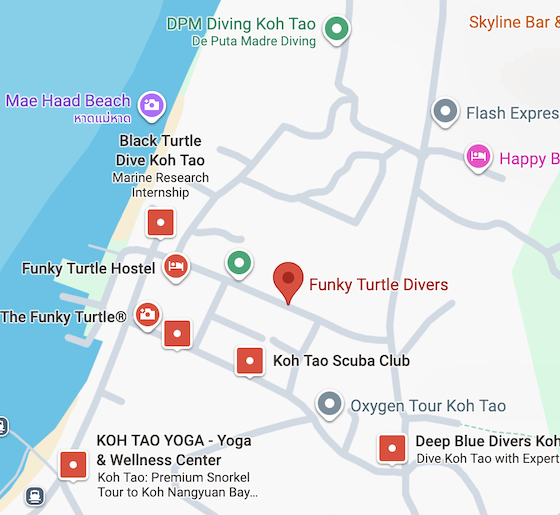
At Funky Turtle Divers, that’s exactly what we’ve tried to build.
Our team is made up of experienced instructors who understand that no two students are the same. Every year we teach people of different ages, nationalities, backgrounds and confidence levels. Some arrive having spent their lives in the ocean, while others are taking their very first breaths underwater with understandable nerves.
Experience teaches an instructor how to recognise those differences. It teaches them when to slow the pace, when to explain something in a different way, when to give another demonstration and when simply offering reassurance is enough for everything to click.
That ability doesn’t come from the logo on an instructor’s certification card.
It comes from experience, mentoring and a genuine passion for helping people become safe, confident divers.
So our advice is simple.
Choose a dive school whose values align with your own. Read the reviews. Speak to the team. Ask questions. Find out how they teach, how much experience their instructors have and whether they genuinely care about your learning experience.
If you choose the right dive school, there’s a very good chance you’ll also end up with the right instructor – and that’s what will make the biggest difference to your diving journey.
Become a Diving Instructor
Why Funky Turtle Divers Teaches SSI
At Funky Turtle Divers, we’ve chosen to teach SSI because, after many years working within the dive industry, we believe it provides the best fit for the way we want to teach.
We value the flexibility it gives our instructors to adapt to different learning styles while still meeting the same high training standards. We believe its digital learning platform is one of the strongest available today, making it easy for divers to continue learning long after they’ve completed their first certification. Having SSI’s regional support here on Koh Tao is another benefit that helps local dive centres continue delivering an excellent standard of training.
That doesn’t mean we think PADI is a poor choice.
Far from it.
PADI has played an enormous role in developing recreational diving around the world and continues to train outstanding divers every year. Without PADI, recreational diving simply wouldn’t be where it is today.
If you’re already PADI certified, you’ll be just as welcome at Funky Turtle Divers as an SSI diver.
Because ultimately, great divers aren’t created by agencies.
They’re created by great dive schools, great instructors and great experiences.