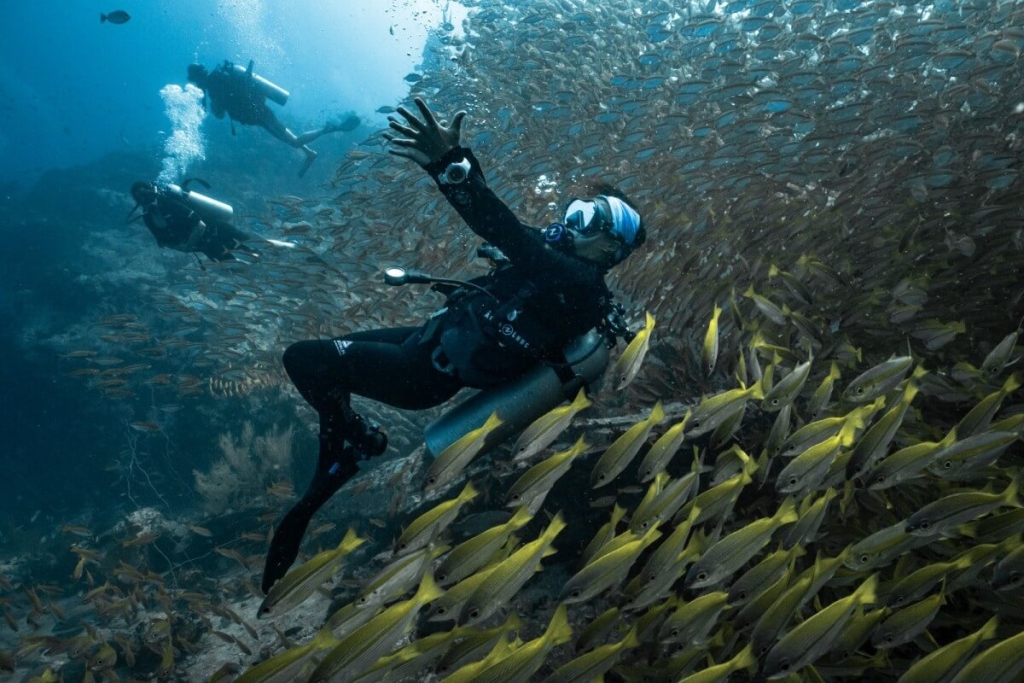


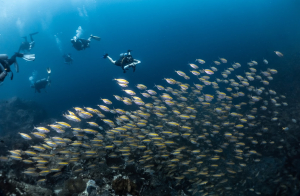
Haven’t been diving for a while? That’s completely normal.
Scuba diving involves skills, procedures and equipment that most of us don’t use in everyday life. After some time away, things that once felt automatic can take a little time to come back.
Our Refresher is designed to give you that time.
You’ll still complete two ocean dives, but rather than jumping straight back into a regular fun diving group, we’ll slow things down at the beginning. We’ll refresh the important knowledge, go through your equipment, review essential safety procedures and practise key scuba skills before gradually getting you back to simply enjoying being underwater.
The goal is simple: by the end of your refresher, we want you to feel like a diver again.
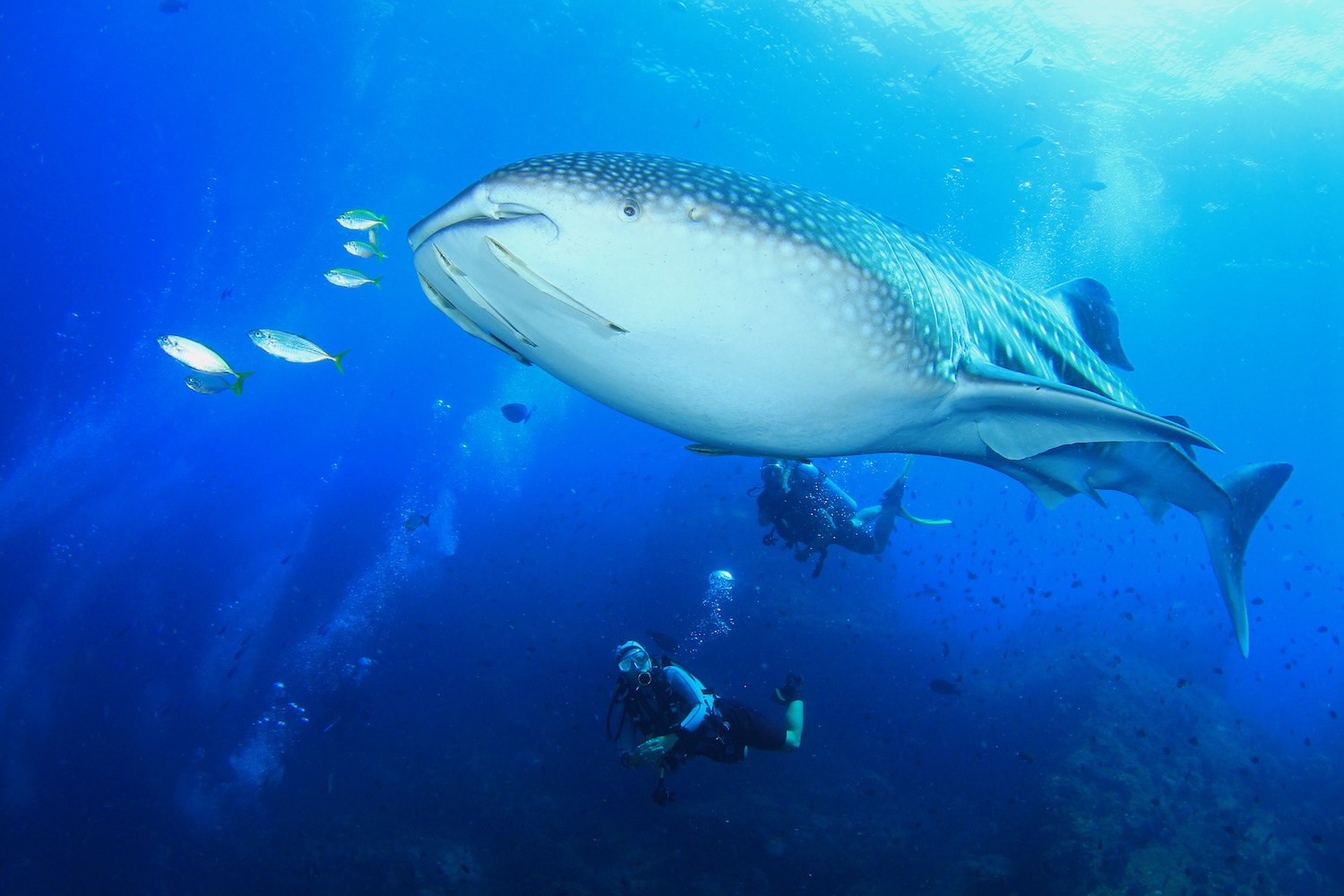
Refresher at a Glance
- Duration: Half Day
- Dives: 2 Ocean Dives
- Location: Koh Tao
- Certification Required: Open Water Diver or equivalent
- Experience: No minimum number of logged dives
- Medical: You must be medically fit to scuba dive –
Do I Need a Scuba Refresher?
The answer depends on more than simply how long it’s been since your last dive.
A diver with 150 logged dives who hasn’t dived for a year has a very different level of experience from someone who completed their Open Water course six months ago and hasn’t been underwater since.
As a general guideline, at Funky Turtle Divers we recommend completing a refresher if it has been:
- 4–20 logged dives: More than 6 months since your last dive
- 21–100 logged dives: More than 12 months since your last dive
- 100+ logged dives: More than 18–24 months since your last dive
These are guidelines rather than strict rules. Your certification level, previous experience, confidence and the diving you’re planning all play a part.
And if you’re looking at those numbers thinking, “Technically I don’t need one, but I’m not sure I remember everything…” – that’s a pretty good reason to do one anyway.
There’s no downside to starting your diving holiday feeling prepared and confident.
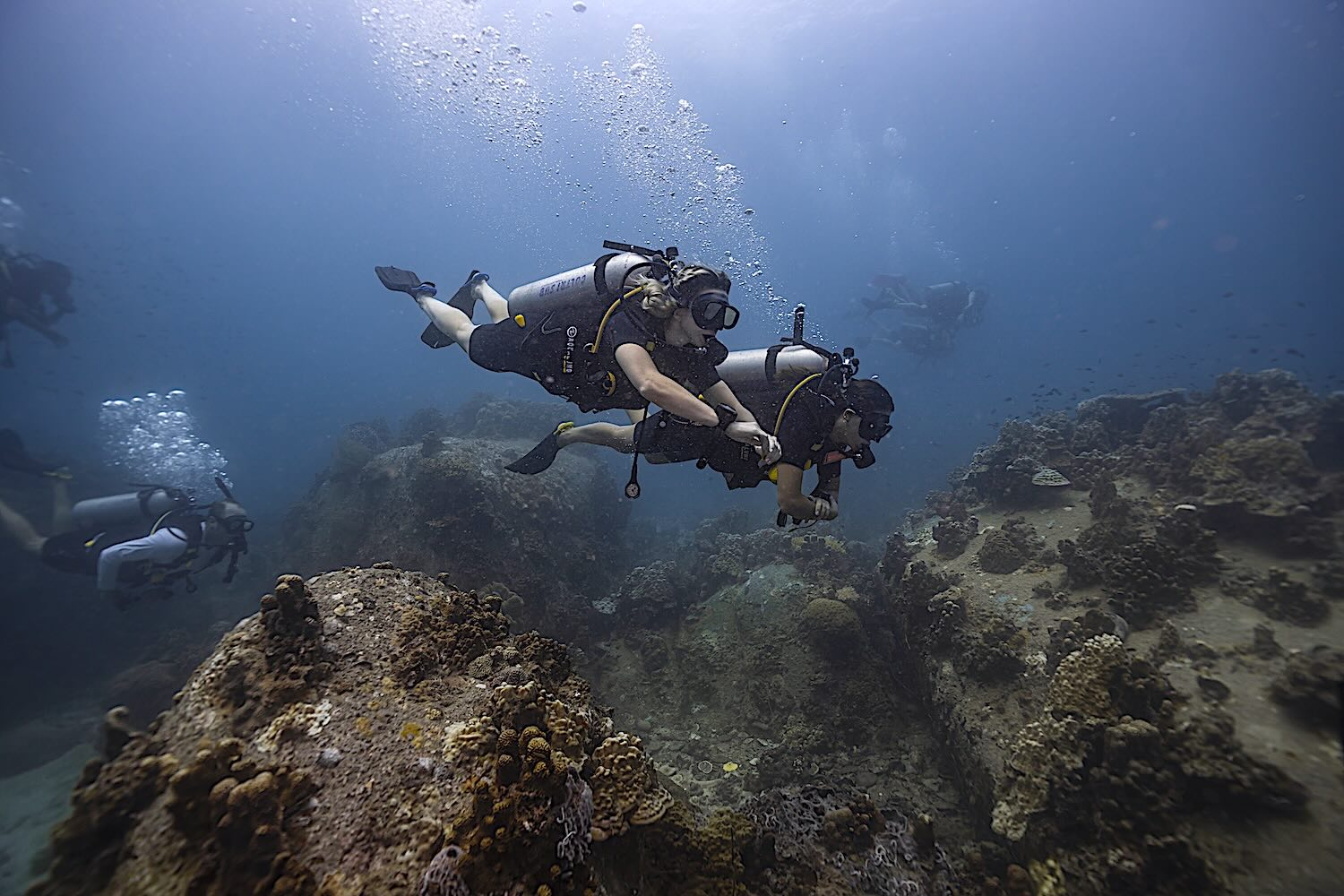
Why Is a Scuba Refresher Important?
A refresher isn’t just about remembering how to clear your mask or recover your regulator.
It’s about getting your awareness, confidence and basic diving habits back before you’re expected to concentrate on enjoying a normal fun dive.
After time away from diving, you may find yourself thinking about things that used to happen automatically:
How does my equipment fit together? How much weight do I need? What was that hand signal? How do I control my buoyancy? Where should my alternate air source sit?
Trying to remember all of that while descending onto a busy dive site isn’t the best way to start your first dive back.
A refresher gives you the time and space to work through those things properly.
It’s About Safety
Good scuba diving relies on being comfortable with your equipment, understanding basic safety procedures and being able to respond appropriately if something doesn’t go according to plan.
We’ll review the important procedures before entering the water and practise essential skills underwater so they’re fresh in your mind again.
It’s About Your Enjoyment
Your first dive back shouldn’t be spent worrying about your equipment, fighting your buoyancy or trying to remember what you’re supposed to be doing.
The more comfortable you are, the more attention you can give to the reason you’re actually here – enjoying the dive.
By starting slowly, we give you the chance to settle back into diving without pressure.
It’s About the Other Divers in Your Group Too
Scuba diving is a team activity.
When you’re comfortable, aware and in control underwater, it makes the dive better for your buddy and everyone else in your group.
A diver who is struggling with buoyancy, equipment or basic procedures can require a lot of attention from the guide and can affect the experience of the other divers.
Completing a refresher before joining regular fun diving helps make sure everyone gets the safe, relaxed and enjoyable dive they came for.
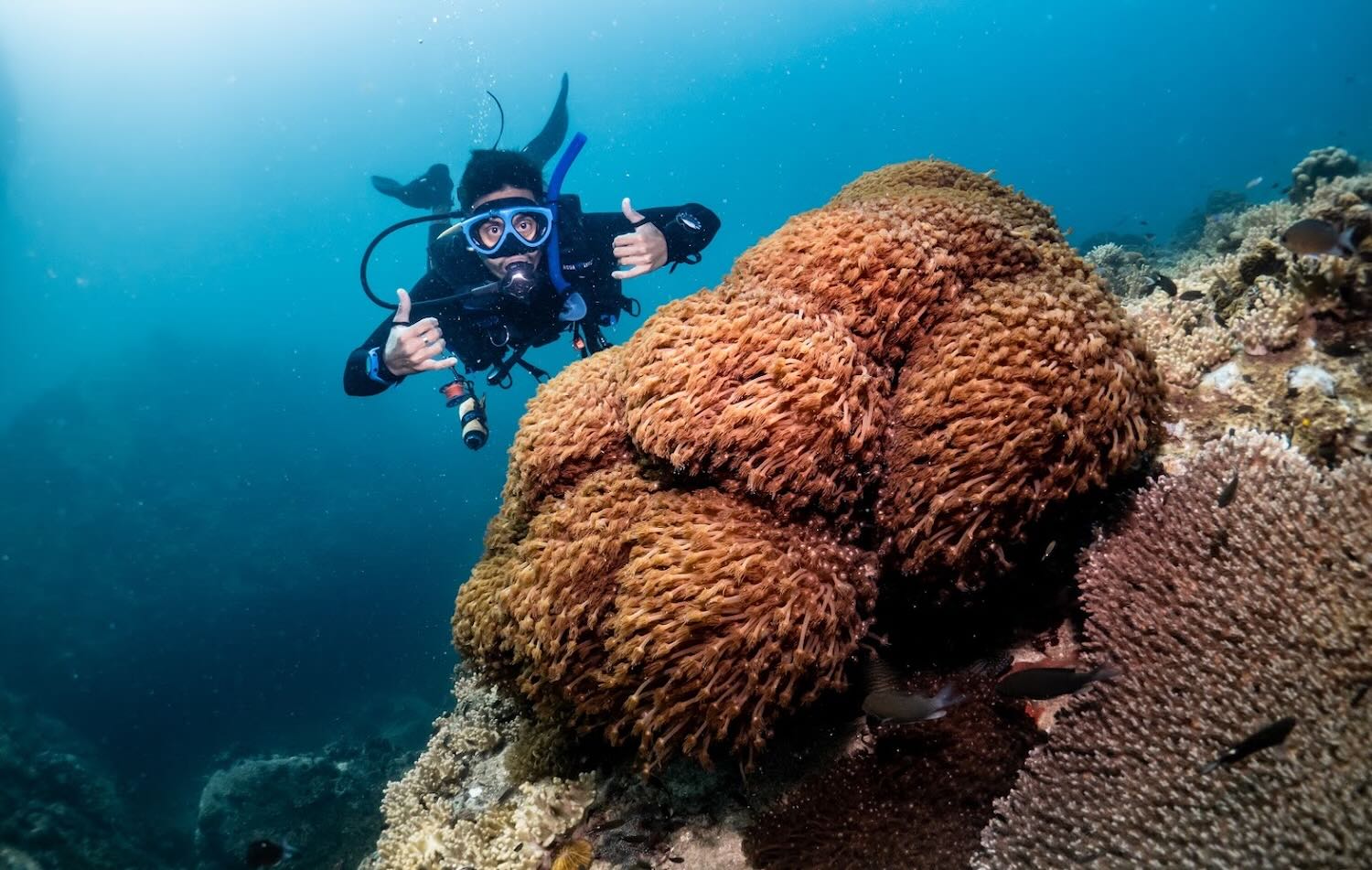
What Happens During Your Scuba Refresher?
Our refresher isn’t designed to feel like you’re repeating your Open Water course.
Instead, we’ll concentrate on the things you actually need to remember before getting back underwater.
1. Academic Refresher
Before heading to the boat, we’ll refresh the important knowledge behind safe recreational diving.
We’ll review key topics such as:
- Basic dive planning
- Depth and certification limits
- Air management
- Equalisation
- Buoyancy
- Safe ascent procedures
- Buddy awareness
- What to do if something doesn’t feel right
It’s also your opportunity to ask questions about anything you’ve forgotten or aren’t completely sure about.
2. Safety Procedures & Hand Signals
Communication underwater needs to feel familiar again.
We’ll review the important hand signals you’ll use with your buddy and dive professional, along with the safety procedures we use before, during and after every dive.
By the time we enter the water, you’ll know exactly what to expect.
3. Equipment Setup
If you haven’t assembled scuba equipment for a while, don’t worry – we’ll go through it together.
We’ll refresh:
- BC and cylinder setup
- Regulator attachment
- Air checks
- BC operation
- Alternate air source positioning
- Dive computer basics
- Pre-dive checks
Rather than having everything prepared for you, we want you to become familiar with your equipment again so you understand what you’re using and feel comfortable with it.
4. Weight Belt & Weighting Setup
Correct weighting makes a huge difference to your diving.
We’ll go through how to correctly prepare and position your weights, how your weighting affects buoyancy and how to make sure your weight system can be released correctly in an emergency.
We’ll also help establish an appropriate starting weight for you rather than simply guessing and hoping for the best.
Your First Dive Back
Then it’s time to get underwater.
But we’re not going to rush.
Your first dive is specifically designed to give you time to remember what being underwater feels like.
We’ll enter the water, get comfortable on the surface and begin slowly.
For many returning divers, simply putting their face in the water and breathing through a regulator again is the moment everything starts coming back.
We’ll give you time to settle your breathing, become comfortable with your equipment and adjust to the feeling of being underwater before moving on.
Once you’re ready, we’ll work through the essential scuba skills.
These can include:
- Regulator recovery and clearing
- Mask clearing
- Alternate air source procedures
- Buoyancy control
- Controlled descents and ascents
- Air and depth awareness
- Buddy positioning and communication
- Emergency procedures
- Weight and equipment awareness
We’re not interested in rushing through a checklist.
The objective is to make sure you’re comfortable and in control before continuing the dive.
Once the skills are complete and you’re feeling good, we’ll head off and enjoy the rest of the dive.
Dive Two – Back to Diving
Your second dive is where everything starts to feel normal again.
With the academics refreshed, your equipment familiar and the essential skills completed, we can concentrate much more on simply diving.
We’ll continue working on things like buoyancy, positioning, breathing and air awareness while exploring one of Koh Tao’s beautiful dive sites.
For most divers, this is the point where the muscle memory kicks in and they realise:
“Oh yeah. I remember this.”
By the end of the second dive, the aim is for you to feel comfortable joining our regular fun diving trips and ready to start exploring Koh Tao properly.
What If I’m Really Nervous?
That’s absolutely fine.
In fact, if you’re nervous about getting back in the water, doing a refresher is one of the best decisions you can make.
Tell your dive professional how you’re feeling.
We can slow things down, explain anything you’re unsure about and give you time to get comfortable before progressing.
There is no prize for getting underwater the fastest.
The goal is to get you back to a point where diving feels comfortable, controlled and enjoyable again.
What Happens After My Refresher?
Once you’ve completed your two refresher dives and you’re comfortable underwater again, you’re ready to get back to the good stuff.
Join our regular Fun Diving trips and explore everything from Koh Tao’s colourful shallow reefs to its famous offshore pinnacles, wrecks and incredible marine life.